Use throughout the 8-week lab
Game Design Guide
A quick reference for moving from an early idea to a game people can play, test, and improve.
Key question
What do we need to learn next?
From an idea to a playable game
Design is a cycle, not a straight line. You will make an idea, try it, learn from it, and change it more than once.
- Phase 1: Empathize
- Learn about the players and the real experience your game represents.
- Example: Ask what reaching graduation feels like for different Gibson Ek students.
- Phase 2: Define
- Choose the specific experience or problem your game will focus on.
- Example: Our game will show how students balance projects, internships, and support.
- Phase 3: Ideate
- Generate many possible game ideas before choosing one to develop.
- Phase 4: Prototype
- Make the quickest playable version that can answer a design question.
- Phase 5: Test and iterate
- Watch people play, find what works, and revise the game.
Try this in your game: Write the one question your team most needs its next prototype to answer.
Key question
What does each piece help a player do or understand?
Game components
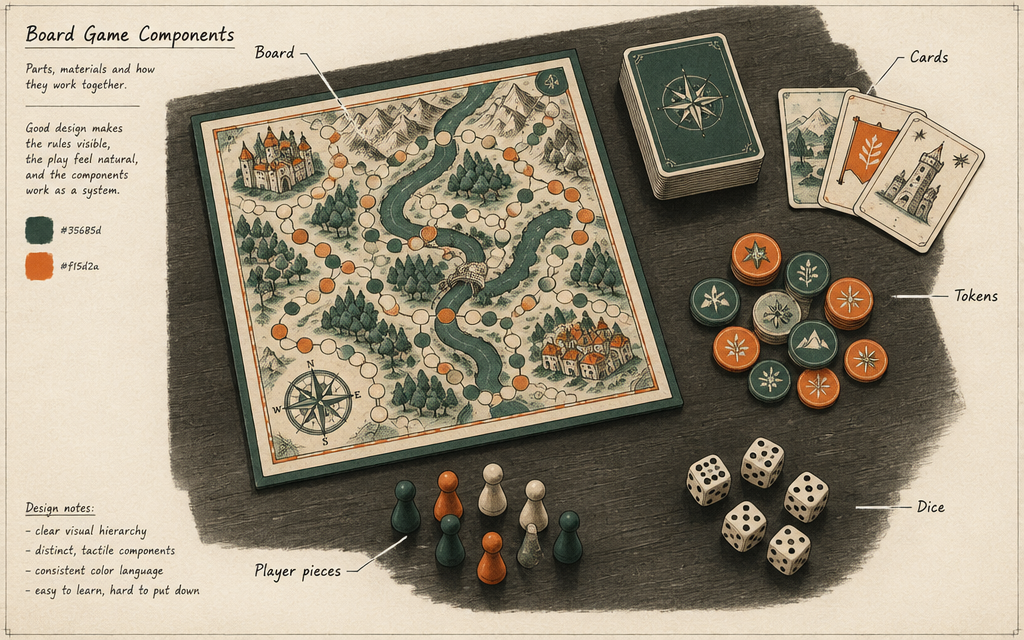
Components are the physical pieces players see, hold, move, draw, or track. Every component needs a job.
- Board or play area
- Shows locations, paths, spaces, or places where actions happen.
- Example: A path through the 101, 201, 301, and 401 years.
- Cards
- Hold information, choices, events, goals, or actions.
- Example: Project Opportunity, Internship Challenge, or Community Support cards.
- Tokens and markers
- Represent players, resources, progress, or changing conditions.
- Dice, spinners, or shuffled decks
- Create uncertainty and surprise.
- Player aids
- Remind players what they can do without making them search the rules.
Try this in your game: List only the components your first playable version truly needs. Substitute paper scraps, coins, or borrowed pieces.
Key question
What will players do again and again?
Game mechanics
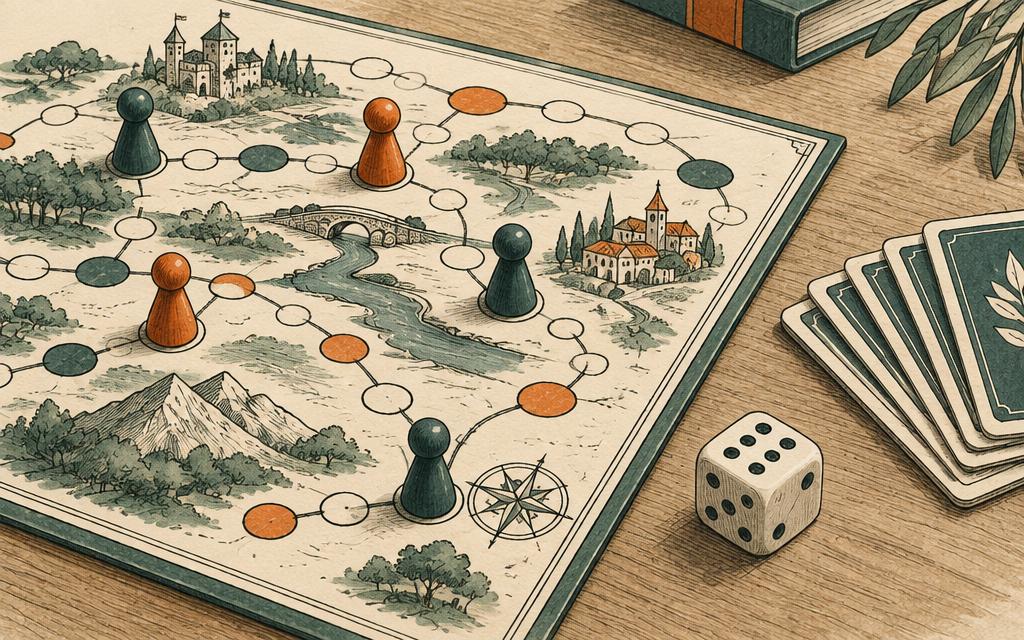
Mechanics are the actions and systems that make a game work. The theme is what the game is about; mechanics are what players do.
- Move
- Travel between spaces, locations, or stages.
- Example: Move toward an exhibition after completing project steps.
- Collect and spend
- Gain resources, then decide when or how to use them.
- Example: Spend time and support tokens to complete a goal.
- Draw and play cards
- Receive information or choose an action from a hand.
- Trade or negotiate
- Exchange resources, promises, or information with other players.
- Build or place
- Add pieces to create something or control part of the play area.
- Work together
- Coordinate actions so the whole group can succeed.
- Take a risk
- Choose between a safer result and a more uncertain reward.
- Race or compete
- Try to reach a goal, earn the most points, or complete something first.
Try this in your game: Choose two mechanics that fit the real Gibson Ek experience. Explain why each one belongs.
Key question
What does success look like, and how will players recognize it?
Goals, endings, and winning
Players should know what they are trying to accomplish, how their actions move them forward, and exactly when the game ends.
- Competitive
- One player or team wins by reaching a goal or earning the best result.
- Cooperative
- Players win or lose together against a shared challenge.
- Team-based
- Groups coordinate within their team while competing with another team.
- Finish condition
- A clear event ends the game, such as reaching graduation, completing goals, or running out of rounds.
Try this in your game: Complete this sentence: The game ends when ____. A player or team succeeds by ____.
Key question
Does a player's decision change what happens next?
Turns and meaningful choices
A turn is the repeatable sequence of actions a player takes. Strong turns are easy to follow but include choices that matter.
- Core loop
- The action pattern players repeat throughout the game.
- Example: Draw an opportunity, choose a project action, spend a resource, then update progress.
- Strategy
- A plan a player can form based on choices and information.
- Chance
- An uncertain result created by dice, shuffled cards, or hidden information.
- Downtime
- Time spent waiting without making choices or paying attention.
Try this in your game: Write one sample turn in three or four steps. Circle the step where the player makes the most important choice.
Key question
Do the actions in the game feel like the experience we want to represent?
Theme and experience
Theme is the subject, setting, and story of a game. A strong theme helps the rules and components feel connected rather than decorative.
- Theme
- The world, subject, or story the game presents.
- Example: The Gibson Ek journey toward graduation.
- Player role
- Who the player is inside the game and what they are responsible for.
- Tone
- The feeling the game creates, such as hopeful, tense, collaborative, or funny.
- Theme-mechanic connection
- A rule represents something meaningful from the real experience.
- Example: Asking another player for support is more connected than simply gaining random points.
Try this in your game: Pick one rule and explain what part of Gibson Ek life it represents. If the connection is weak, revise the rule.
Key question
Can someone play enough of this version to give us useful evidence?
Paper prototyping
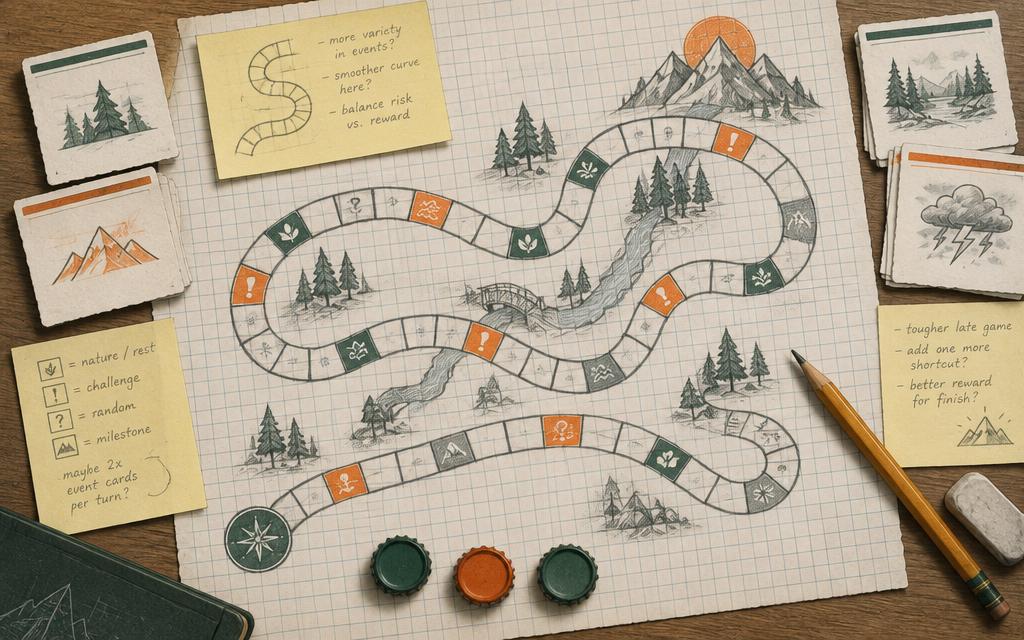
A prototype is a rough model built to test an idea. It is supposed to change, so speed and clarity matter more than polished artwork.
- Start small
- Test one turn, one system, or a short version before building the entire game.
- Use simple materials
- Paper, index cards, sticky notes, coins, and borrowed dice are enough.
- Label everything
- Use large, readable words and simple symbols so testers can understand the pieces.
- Write temporary rules
- Record the current rules even when you expect them to change.
- Make changes visible
- Cross out, tape over, or replace pieces instead of starting over.
Try this in your game: Build the smallest version that lets another person complete three turns. Stop decorating when it becomes playable.
Key question
What happened, and what evidence should guide our next change?
Playtesting and iteration
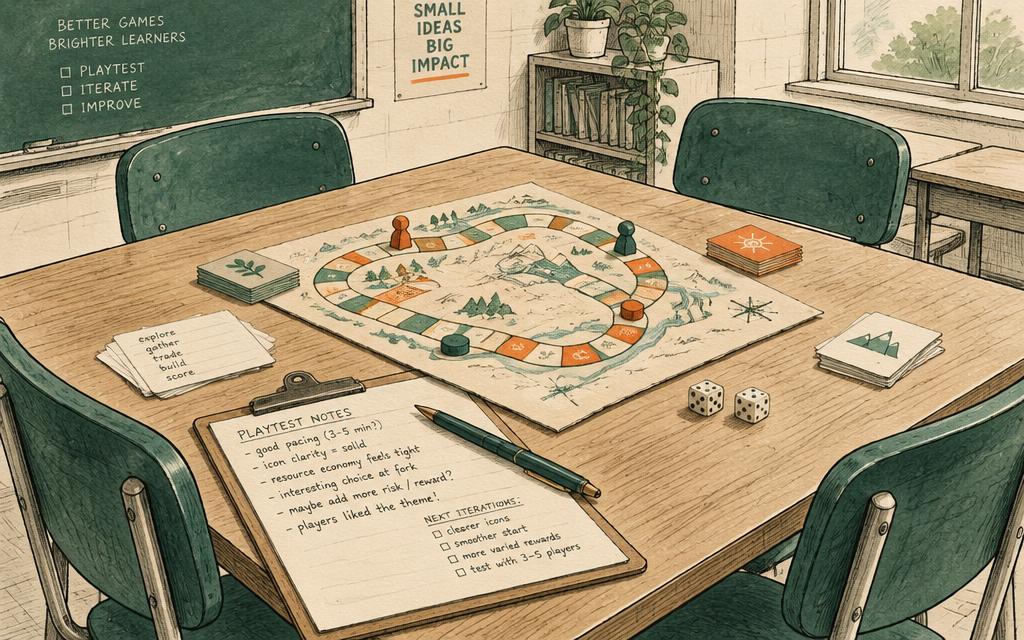
A playtest is an experiment, not a performance. The goal is to discover what players actually do—not to prove the game is already good.
- Observe
- Watch where players pause, ask questions, lose interest, or become excited.
- Do not rescue the rules
- Let the written rules and game pieces do the explaining whenever possible.
- Ask neutral questions
- Ask “What were you thinking here?” instead of “Was that fun?”
- Record evidence
- Write what happened, not only whether someone liked it.
- Change one thing at a time
- Choose the most important problem, revise it, and test again.
Try this in your game: After a test, record: one thing to keep, one thing to change, and the evidence behind each decision.
Quick lookup
Game design glossary
- Balance
- Players or strategies have a fair chance to succeed.
- Component
- A physical piece used to play the game.
- Core loop
- The main sequence of actions repeated during play.
- Iteration
- A new version made after learning from a test.
- Mechanic
- An action or system that controls how the game works.
- Prototype
- A rough, testable version of an idea.
- Resource
- Something players collect, manage, trade, or spend.
- Rule
- A statement that explains what players may, must, or cannot do.
- Strategy
- A plan based on choices and available information.
- Theme
- The subject, setting, story, and feeling of the game.
- Turn
- A player's opportunity to take actions.
- Win condition
- The exact requirement for winning or succeeding.